All applications
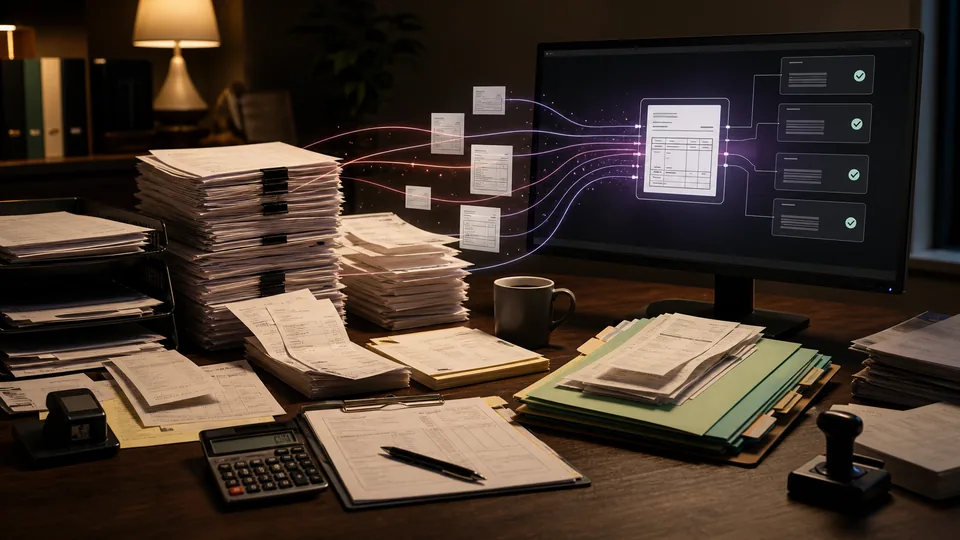
Operations colleagues comparing job records with a workflow performance report at a distribution workspace.
Home services & trades · Landscaping & grounds · Distribution & logistics · Professional services · Corporate operations

An operating review for your AI workflows

We join available billing, usage, and workflow review records into an operating report. Cost is assessed alongside human checking and correction, so cheaper output is not mistaken for better work.

How we put it to work

  1. Establish the actual cost of a workflow.

    We reconcile subscription invoices and usage records with the work they support. Missing usage data stays visible, and shared costs use an agreed allocation rather than a hidden assumption.

    Your teamConfirms the bills, allocation method, and what counts as accepted work.

    Establish the actual cost of a workflow. We reconcile subscription invoices and usage records with the work they support. Missing usage data stays visible, and shared costs use an agreed allocation rather than a hidden assumption.
    Billing records
    AI
    Workflow usage
    Cost allocation
  2. Find the expensive rework.

    Calculations compare volume, review time, corrections, and cost per accepted result. AI summarizes recurring feedback with links to the reviewed examples.

    Your teamChecks the evidence and decides which issue matters most.

    Count accepted work, not just output. Illustrative review categories: Draft accepted; Draft rewritten; Handoff failed. Reporting joins usage to actual review outcomes.: Accepted results; Rework recorded; Failure investigated. Owner checks evidence before approving changes.
    Count accepted work, not just output
    Illustrative review categories · Illustrative example
    Draft accepted
    Draft rewritten
    Handoff failed
    AI groups the reports
    Accepted results
    Rework recorded
    Failure investigated
    Reporting joins usage to actual review outcomes.
    Owner checks evidence before approving changes
  3. Test before changing the live process.

    We compare proposed prompt, rule, or model changes on an agreed test set. Releases need quality checks and a rollback plan; unused subscriptions are only removed after owner approval.

    Your teamApproves the change, spending decisions, and acceptance criteria.

    Test before changing the live process. We compare proposed prompt, rule, or model changes on an agreed test set. Releases need quality checks and a rollback plan; unused subscriptions are only removed after owner approval.
    Change review
    AI
    Current version
    Candidate version
    Release decision

What your first engagement includes

  1. 01Review your setupConfirm existing features, data access, and system compatibility.
  2. 02Configure one workflowConnect the tools, define approvals, and handle exceptions.
  3. 03Test and hand overPilot on selected work, train your staff, and provide operating instructions.

PILOT REVIEW

How we measure the pilot

Compare the same work before and during the pilot.

  • Time to complete

    Human handling time per accepted workflow result, including the human check.

    Review time
  • Review quality

    How often a draft needs a material correction before approval.

    Correction rate
  • Workflow reliability

    Material corrections, failed handoffs, and unexplained charges.

    Exceptions to resolve
  1. Current process
  2. Pilot results
  3. Review together

Agree what to improve or expand based on the results.

Start with one workflow in your business.

Swipe to explore 1 / 3